Murder of Joshua Gruen
City of GodThe Murder of Joshua Gruen is the event that sets the novel's contemporary plot in motion: the fatal beating of Sarah Blumenthal's husband, a rabbi who had traveled to Vilnius in search of Josef Barbanel's hidden ghetto diary. His death is not merely a personal tragedy but a hinge point in the narrative, transforming a scholarly quest into an urgent, grief-driven mission. The murder connects the historical horror of the Kovno Ghetto to the present day, as the recovery of the archive he died seeking becomes the means by which Sarah and Thomas Pemberton confront the past. The event also exposes the fragility of historical memory, as the church where the diary was hidden no longer exists and the rabbi's own investigation was cut short before he could complete it.
The Circumstances of the Attack
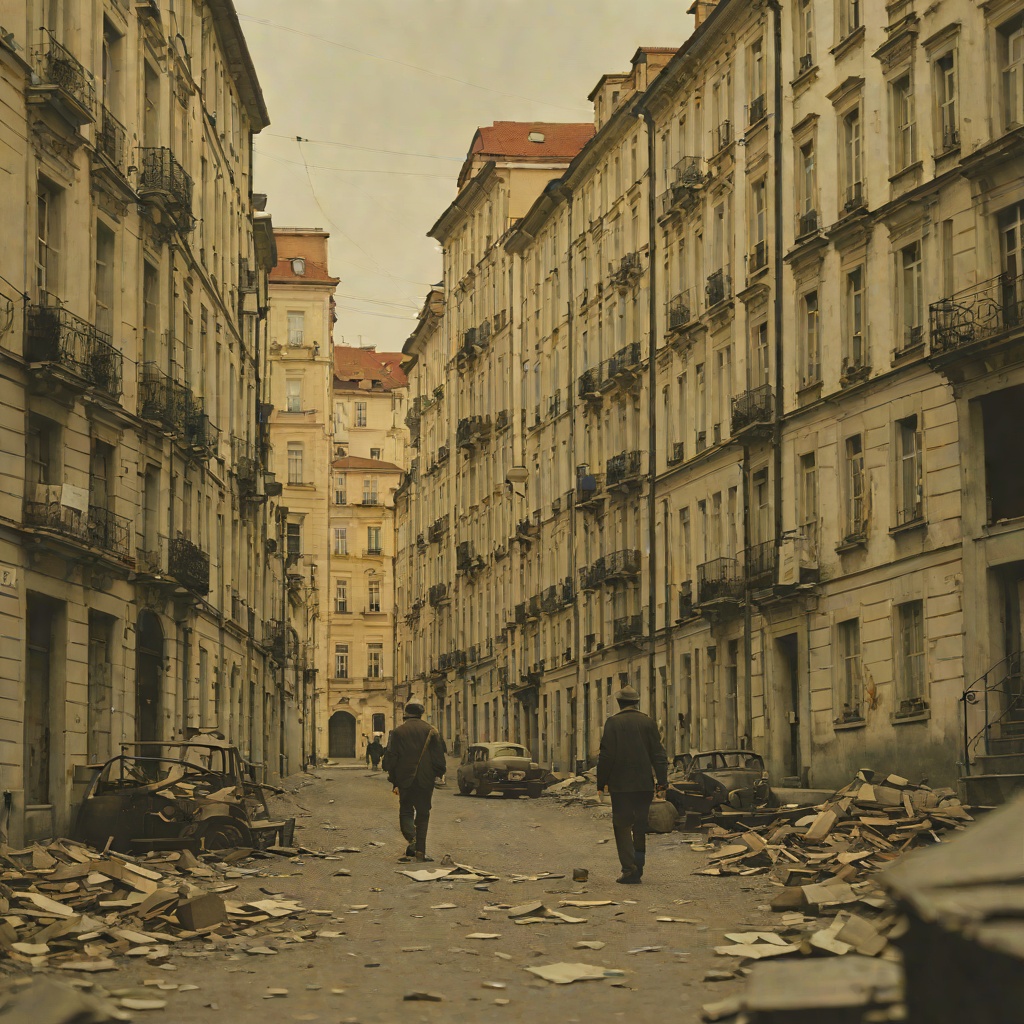
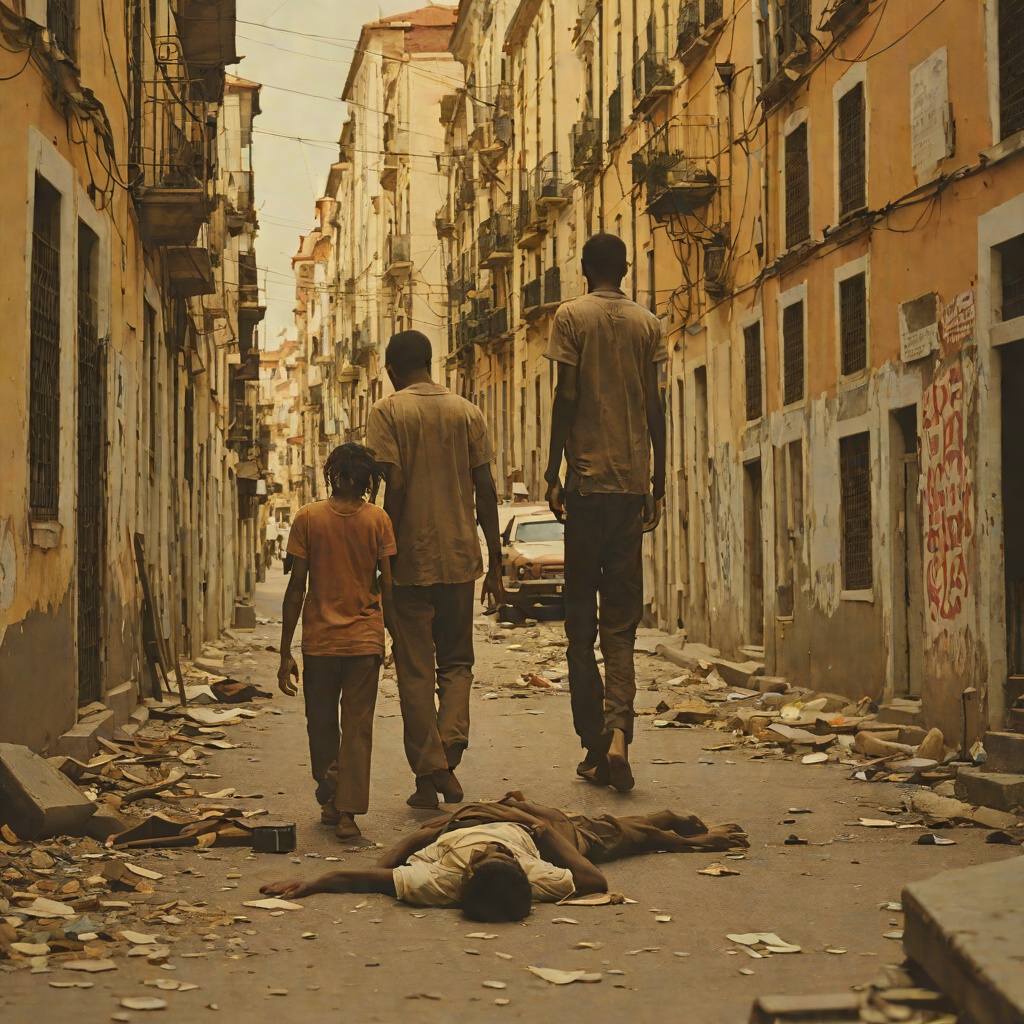
Joshua Gruen was beaten fatally on the doorstep of an ancient synagogue on Vokieciu Street in Vilnius, a building that stood boarded up, with no congregants, only visitors coming as to a graveyard. The synagogue was being preserved by the city as a ruin. An elderly Lithuanian woman, the caretaker who lived in a cottage behind the synagogue, heard shouts and screams in the dark and found Joshua bleeding in front of the doors; she called the police. Before the attack, she had heard someone knocking on the synagogue doors, and had she gone out to answer, she would have told whoever it was that the building was closed. Pem later realized that Joshua had never talked to the old woman, that he had not had the chance. When Pem told her that the beaten American was a rabbi who had come to Vilna seeking journals from the ghetto held for safekeeping by a priest, she immediately identified the priest as Father Petrauskas, her own priest from the Church of St. Theresa on Kaunas Street, and crossed herself.
The Aftermath in Vilnius
When Sarah and Pem arrived in Vilnius, Joshua was still alive, though gravely wounded: his skull was fractured, both arms and several ribs were broken, one lung had collapsed, and he had developed pneumonia. The American chargé d'affaires met them at the airport and rushed them to the hospital. Sarah questioned the adequacy of the medical care but had to agree that Joshua's condition made it too dangerous to fly him out. He was in a coma, and permission was asked to trepan him to relieve pressure on the brain. Pem sat with Sarah in the corridor outside the operating room; she did not cry or speak but simply stared at the floor. They had flown from Kennedy to Frankfurt, waited two hours for the connecting flight, and come straight from the Vilnius airport to the hospital. Pem supposed exhaustion served her as a kind of sedative. He closed his eyes and prayed silently for Joshua to pull through but thought that Sarah had probably not prayed. They were put up that night in the ambassador's residence, where the ambassador and his wife took care of all the arrangements for shipping the body home. Sarah's grief was such that a doctor was called in to minister to her, and she was sedated for twenty-four hours.
The Rabbi's Unfinished Investigation
In that time, Pem went to the hotel where Joshua had been staying and packed his few things. The rabbi had been reading Gershom Scholem's Kabbalah, Emil Fackenheim's Encounters between Judaism and Modern Philosophy, and Trent's Last Case, the 1930s English country-house mystery by E. C. Bentley; Pem supposed Joshua had gone back to it as to a classic. Also in the hotel room was the rabbi's notebook, in which he had written a careful account of everyone he had spoken to about the ghetto diary. The church where it had been hidden no longer existed—a modern apartment house stood in its place. There were two or three additional names and addresses, presumably people he had not had the opportunity to contact before he was assaulted. The notebook thus became a crucial artifact, preserving the thread of the investigation that Joshua's death had cut short.
The Recovery of the Archive
The murder's legacy is fulfilled when the ghetto archive chest is finally recovered and opened. In a small office in the International Arrivals Building, Sarah, Pem, a young woman from the U.S. Attorney's office in New York, and various customs people watch as an inspector takes up a hammer and chisel. The chest sits on a steel table, larger than Sarah had understood from Pem's description—she had imagined it as the size of a footlocker, but it is larger, deeper. It looks homemade, hammered together with big heavy nails and metallic corner pieces, painted white, with raw lumber showing where the paint has flaked off. The customs man finds the rusted locks impervious and asks if he can pry off the hasps, warning that it will splinter the wood. Without quite realizing the proprietorship she has been granted, Sarah nods her approval, yet the sound of the splitting wood makes her wince, as if her father's history is seeping into the room. The hasps are pried off and the thick rope is cut. The inspectors carefully lift out packages of various sizes wrapped in oilskin, with an oilskin lining against the inner sides of the chest—the fierce preservation of these materials is unmistakable and, to Sarah, itself an urgent message that brings a sob to her throat. The packages contain sheaves of paper bound in twine, booklets, manuals, folders, rolled-up blueprints, diagrams, stapled documents, and envelopes of various sizes, each labeled in a small, neat Yiddish script. After opening every packet and envelope and running their hands along the inner walls, the inspectors agree there is nothing of interest to them and excuse themselves. Pem and the attorney dive in, finding in notebooks, students' bluebooks, and unbound pages a diary in one increasingly familiar hand covering a period of three years, from 1941 to the date in 1944 when the ghetto is dismantled and the survivors are marched to the railroad station, along with reams of documentation—rules and regulations issued by the Germans, and innumerable orders with the signature of Commandant Schmitz.
The Photograph of the Runners
Among the recovered materials, Pem hands Sarah an envelope of forbidden little black-and-white photos: a line of men and women marching to work behind barbed wire; a husband and wife and their child on a bench having their picture taken, the cloth stars sewn to their coats; simple pictures with calm, expressionless faces; a woman on her knees in the vegetable garden; the members of the council posing in business suits with stars; a body in a business suit hanging from a gallows, the head awry, staring heavenward; winter, snow on the ground. And then a photograph of seven little boys in front of a wood cabin, standing at their idea of attention on the steps, wearing military-school caps and stars on their breasts that might possibly be imagined as insignia of their office as runners for the council. They are unsmiling little boys, one with shoulders hunched up in the instinctive posture of self-protection, or perhaps he is cold; they are all underdressed, with short pants and sweaters and jackets they have outgrown. Each stands at attention, feet together, arms pressed against his sides, looking into the camera in the full knowledge of death. Sarah finds her father in the first row. This photograph, recovered through the quest that Joshua's murder set in motion, gives tangible form to the testimony of Sarah's father, the runner who carried messages for the council and who, as a ten-year-old boy, felt privileged that his star was not like all the other stars but some indication of rank. The image of the seven boys, standing at attention in the full knowledge of death, becomes the novel's most haunting emblem of the children who served as the ghetto's messengers, and of the archive that preserves their memory.